
This educational guide is written by the Meadow team at Ostra Health. It has not been reviewed by a clinician and does not provide medical advice.
What to bring
Most visits need four things: how many days hurt, how severe those days were, which medicines you took, and whether anything obvious lined up with the attacks. A 30, 90, or 180 day window is easier to discuss than a year of unsorted notes.
Lead with attack days in the window, not a story of the worst afternoon. Then list preventives and abortives separately, including what you think happened after the dose. Close with two or three repeating contexts, if you truly saw them, and say when you are unsure.
A worked example
For a 90 day follow-up: 11 attack days. Typical pain 5 to 7. Abortive taken on 9 of those days, usually within an hour of the start. Preventive doses missed on 6 days, clustered in one travel week. Three attacks followed a short night of sleep. No new emergency visit.
That paragraph is enough to start the appointment. The diary can sit behind it if the clinician wants a day. The attack frequency tool can turn an odd-length window into a per-30-day rate so two visits are comparable.
What to leave out
Leave out a self-assigned diagnosis and a request that the app's risk number be treated as a test result. Leave out every possible trigger if you tagged them speculatively. A short honest list is easier to act on than a crowded one.
Do not edit the past the night before so the chart looks calmer or worse. Add the missing day if you remember it, and say it was entered late.
How Meadow builds the PDF
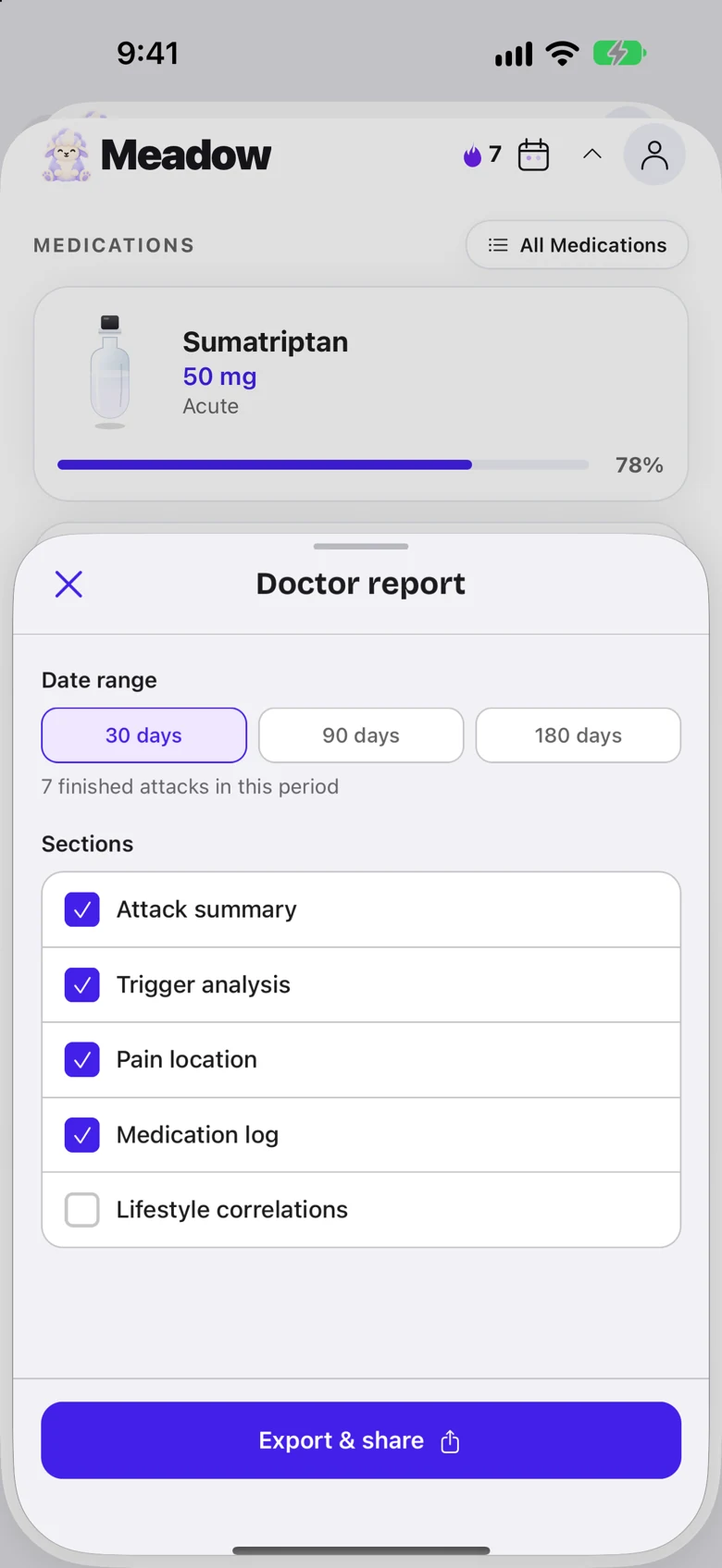
Meadow can generate a doctor-ready PDF for the last 30, 90, or 180 days, with an attack summary, pain locations, trigger notes you logged, and the medication record. Print it or send it before the appointment.
The PDF is your journal, formatted. It is not a clinical interpretation, and Meadow does not diagnose, treat, or decide whether a medication worked.