
This educational guide is written by the Meadow team at Ostra Health. It has not been reviewed by a clinician and does not provide medical advice.
What a migraine diary is for
A migraine diary is a timeline of attack days, not a perfect medical chart. It answers three questions a clinician actually asks: how often, how bad, and what you took.
The useful version is short. Start time, a pain number you reuse, the main symptoms, the medication, and one note. If you only have ten seconds, save the time and the pain number and finish the rest later.
What to log, and what to skip
Log the start, even if the attack is still going. An unfinished timestamp is more useful than a reconstructed evening. Add the end time when you know it.
Skip the long trigger checklist on the worst days. Guessing ten causes on every attack makes the diary noisier, not smarter. Add a trigger only when you are confident it was present. The trigger guide covers how to keep that list short.
Do not log a diagnosis, a treatment plan, or someone else's advice as if the diary decided it. The diary records what happened.
A worked example
Tuesday, 7:10am. Pain 6. Pulsing on the left side, light hurts, mild nausea. Took the usual abortive at 7:20am. Note: slept five hours. You do not need the weather, the meal, and a mood score in that same minute.
Thursday is a free day. Marking a day with no attack matters, because frequency is attack days divided by the window, not a pile of bad memories. The attack frequency tool does that arithmetic for a date range you choose.
How Meadow handles the entry
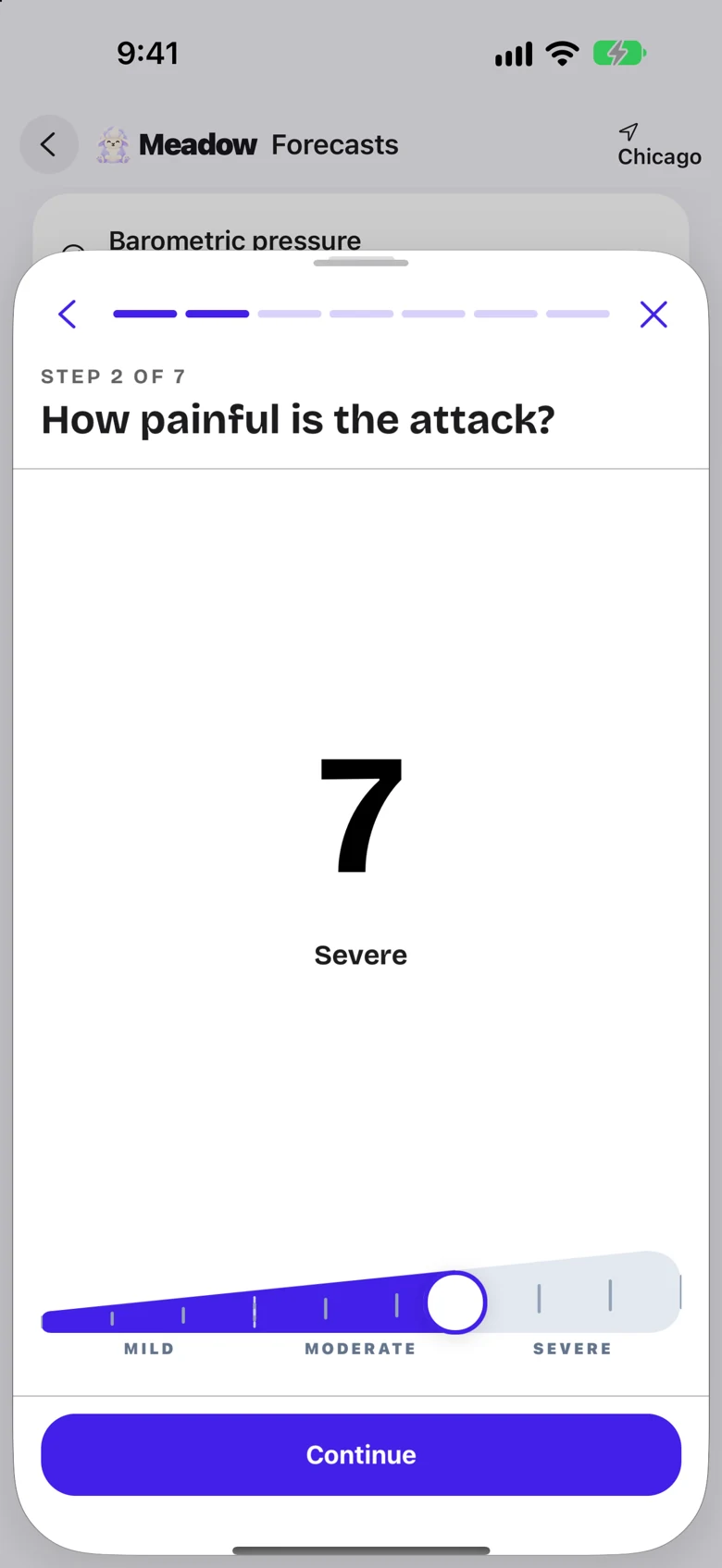
Meadow is a migraine and headache journal. The attack log stores a 0 to 10 pain scale, a head map, symptoms, and medications, and it can attach weather and pressure when location is allowed. You can start a live attack and fill details later.
Meadow does not diagnose migraine, decide that a day was an attack, or tell you what to take. It keeps the record you entered and can turn a stretch of it into a PDF for a visit.